Louisa Ann RYLAND (1814 - 1889) By Walter Ryland
|
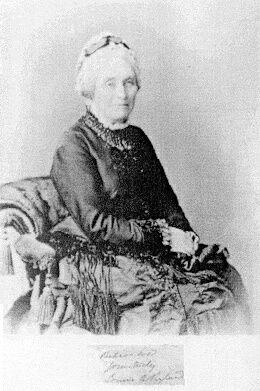
Louisa Ann RYLAND (1814 - 1889) was the single greatest
philanthropist in the history of Birmingham, England. Yet she was a
retiring, reclusive maiden lady who shunned the public spotlight. A
recent article in the Birmingham Post (Sept. 9, 2000) termed her
"the generous mother of the city."
She was born Jan. 17, 1814, in Edgbaston, a luxurious suburb of Birmingham, the only child of Samuel Ryland (1764-1843) and Ann Pemberton (1771-1815). Birmingham was the heart of the Industrial Revolution, bringing forth innovations that changed the world: the steam engine. . . the hansom cab. . . gas lights. But what made the Ryland family wealthy was their vision of future growth. In three generations, they grew from a family of makers of buttons, pins, and toys into one of the largest land-owning entities in Birmingham. What had once been mediocre outlying farmland became prime real estate, as the city's industry and housing had grown and the value of land had grown along with it. |
|
|
Great progress in industry had its down side. In the early Victorian era, the city was a wretched place to live -- inconceivably overcrowded, filled with the stench of factory smoke and even fouler contaminants. Streets were unpaved, working conditions were abysmal, pay was low. One child of every six died before the age of one. Disease and crime were facts of daily life amid the Dickensian squalor.
|
|
|
These conditions did not touch the Rylands. Edgbaston, like their
subsequent residence at Sherborne, was a comfortable suburban haven
for the well-off, strictly zoned to keep metalworking and
manufacturing out.
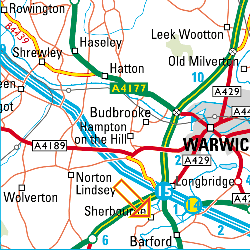
As the only child, Louisa learned well the lessons of prudent investment and financial management. When she was 29, her father died, leaving her estates worth more than a million pounds in Ladywood, Sparkhill, Small Heath, Northfield and Moseley, as well as others at Stratford and Sherborne. |
|
|
Through astute management, she expanded the family fortune many times over. She took good care of her mother until she died Oct. 20, 1862, at the age of 89, when Louisa Ann was 48 years of age. We are told discreetly that Louisa was "disappointed in love," and can only guess at the circumstances. The Birmingham Post article recounts the popular story that she was prohibited by her father from marrying her true love, one Henry Smith, Jr. That sadly romantic tale may or may not be mythical. But since Smith himself remained unmarried until 15 years after Samuel Ryland's death, the story seems unlikely. Whatever may have happened, Louisa was never to have a family of her own. Instead, she adopted the people of Birmingham. The city had been very, very good to her and her family, and she resolved to give some of it back, to do what she could with her resources to make life bearable for the citizens of her beloved but troubled city.
|
|
|
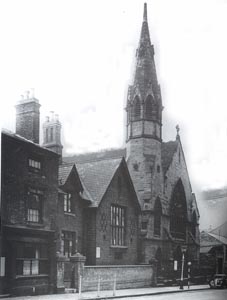
St. Barnabas' Church |
She contributed to recreation, education, worship, and public
health. She was so reticent and private that we may never know the
full extent of her benevolence.
Appropriately, the first major contribution (known to this writer,
at least) begins on Ryland Street North, in Ladywood, where Louisa
donated land and �3000 to build St. Barnabas' Church. She laid
the cornerstone for the church Aug. 1, 1857, the Church was
consecrated on 24th October, 1860 and that for the church school
next door three years later. |
|
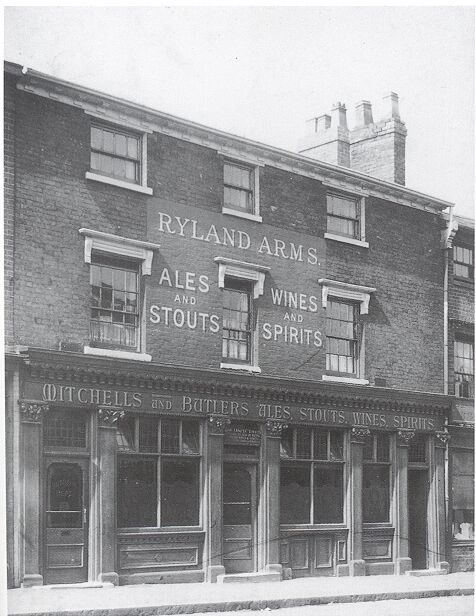
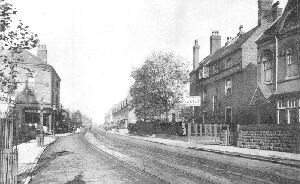
Those buildings are gone now, as Ryland Street has been completely rebuilt since the Second World War. Also missing is a public house on that street -- the Ryland Arms -- an institution of which Louisa Ryland unquestionably disapproved. She used her considerable influence to have the only licensed pub in Sherborne closed. But she did open a coffee shop and reading room at Barford, at which she hosted an annual gathering of the local poor folk. She also built the church for her own parish at Sherborne, from designs by Sir Gilbert Scott, with a few ideas of her own. Her parents are entombed within the church in a striking stone sarcophagus with ornate carvings and inlays bearing the large letter R, the family crest, and repetitions of "Not The Last" -- the family motto.
|
Ryland Arms Ladywood |
|
Cannon Hill Park |
Having previously donated funds for the purchase of Aston Park and Victoria Park, Small Heath, Louisa donated her own estate in Moseley to the Corporation of Birmingham for a large public park. She would not permit it to be named Ryland Park, and requested that it be opened without ceremony or fanfare. Cannon Hill Park remains today the flagship of the city's vast park system, 80 acres incorporating a children's playground, a bowling green, a miniature golf course, tennis courts, a boating lake, nature trails, and a garden with a greenhouse filled with tropical plants. |
|
Louisa had a flair for design and gardening. She personally sketched the designs for most of the park, to a standard to equal the landscaping of her own estates. The Midland Arts Centre, also in the park, comprises a theater, art gallery, restaurant and bookshop. The park adjoins the world-famous Edgbaston Cricket Grounds. |
Cannon Hill Park |
|
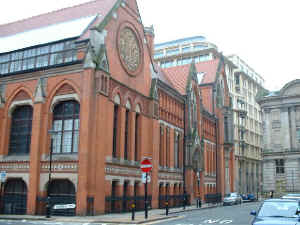
Birmingham Institute of Art and Design
|
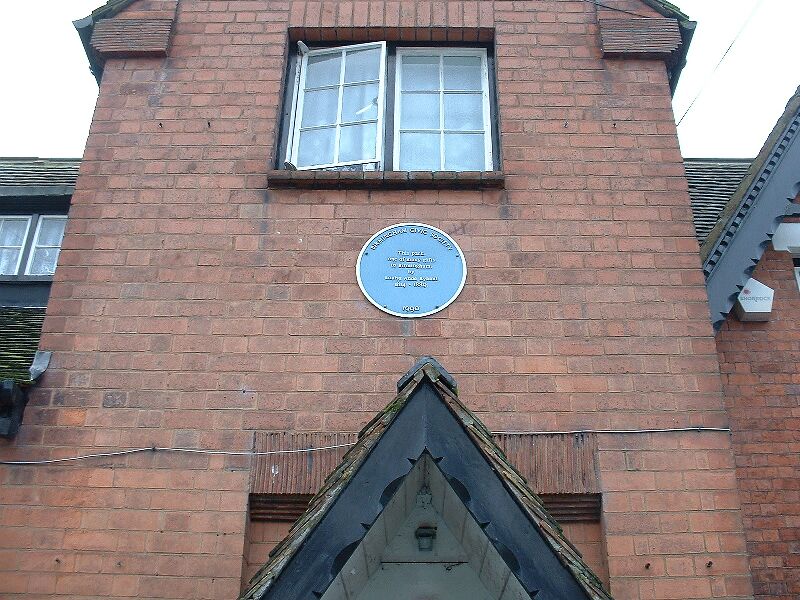
To further the development of young artists, Louisa was the chief contributor to the Birmingham Government School of Ornamental Art, on the corner of Edmund Street and Margaret Street. The school is now known as the Birmingham Institute of Art and Design, part of the University of Central England. She endowed a well-managed fund for student scholarships -- which are still being awarded today, 125 years later. |
|
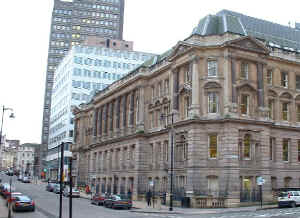
In 1878, she gave her house on Stratford Road to be converted into the Birmingham and Midlands Women's Hospital, financed the alterations necessary for the conversion, and leased the building for a nominal rental for 42 years. This hospital is still in service, having moved alongside the Edgbaston Hospital's maternity facility in 1995. Louisa Ann Ryland died on Jan. 25, 1889, at her primary residence, the Hill in Barford. She left an estate much greater than she had inherited. For official purposes of probate,
|
Birmingham and Midlands Women's Hospital |
|
it was valued at just under three-quarters of a million pounds.
Unofficial estimates of the true value of her holdings range upwards
to 2 million pounds. This would be the equivalent of 130 million
today -- nearly $200 million in US dollars.
Her will is an extraordinarily lengthy and complex document, mentioning some 100 individuals by name. She provided generously for hospitals, churches, and schools, and for numerous friends and relatives. But conditional upon the bequests: the executors had to be satisfied that the institutions spent the money as she directed. And individual heirs, unless they were named Ryland or married members of the nobility, were to add "Ryland" to their surname, or forfeit their inheritance. The son of the late Henry Smith, linked at least in romantic legend with the youthful Louisa, was one of the major heirs. William Charles Henry Alston Smith was known thereafter as Charles Smith-Ryland. The Smith-Ryland family remains today major landowners in Barford and Sherborne.
|
|
|
At her own request, she was not buried in the elaborate stone tomb
in the Sherborne Church, but in the cemetery outside, alongside her
former nurse and companion. Her pallbearers were her servants and
laborers from the village.
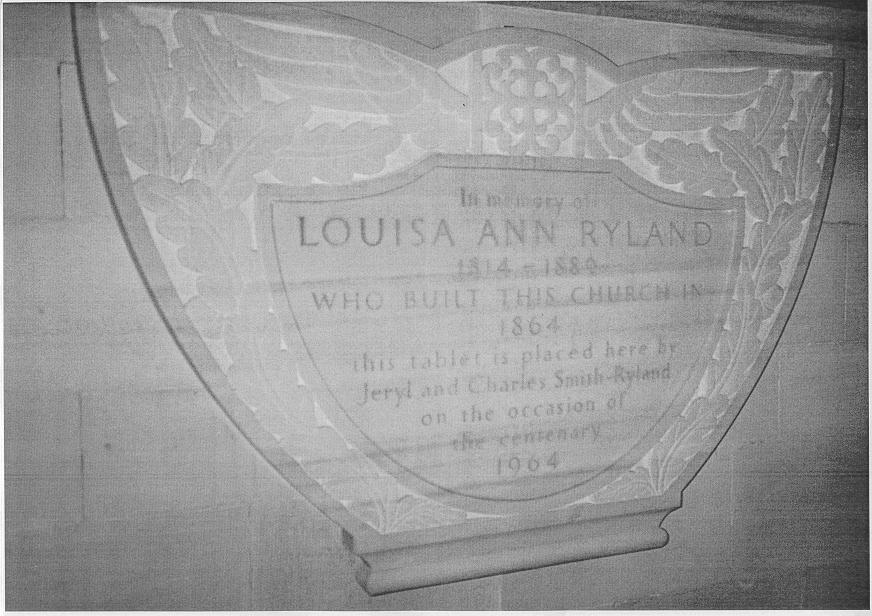
And she left a note: "I am ashamed to mention that the idea has occurred to me that it is possible some little memorial of me may be proposed in Birmingham. Now, I entreat that such may not be the case, for I shrink from having any money collected or trouble taken for such a purpose." This wish was complied with for many years thereafter.
|
|
|
The Birmingham of today has come far from its gritty past. Today,
it is a beautiful city, having grown to become the second largest
metropolis in Britain. That did not come about by accident.
|
|
|
Louisa Ryland House. |
Some say Birmingham is the best-run large city in the world. Its Housing Authority and social services are the largest and most active departments of their kind in the United Kingdom. These departments, dedicated to enhancing the quality of life for all the citizens, are housed in a large, new office building on Newhall Street in the City Centre -- most appropriately named the Louisa Ryland House.
|
| So one might conclude that at last, a fitting memorial now stands to Louisa Ryland, and without any money being collected or "trouble taken" for the purpose. But to paraphrase, if you're ever in Birmingham and are seeking her monument, just look around. | |
|
Many kind friends and distant cousins have contributed to my new-found interest in the Rylands and in Birmingham itself, particularly Ann Seeley, Derek S. Wootton, Robert Deloyde and David Winstone, all of metropolitan Birmingham, and Mandy Pemberton of Melbourne, Australia. All mis-statements and omissions are, naturally, my own. -- Walter |
|
|
"Copyright 2000 by Walter Ryland, wryland@aol.com All rights reserved. Reprinted by permission."
By Walter Ryland |
|