
Birmingham�s Railways
Snow Hill Station
|
Despite the obstacles, the
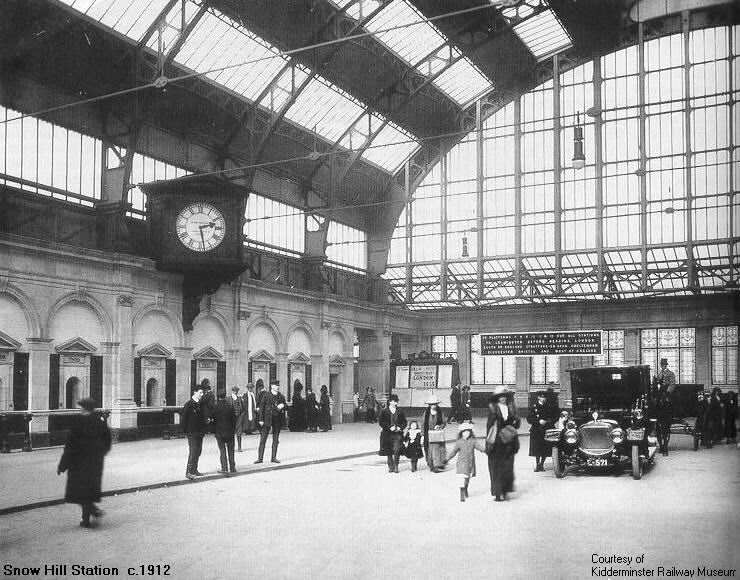
GWR successfully established its Birmingham station at Snow Hill. At
that time, this was a very out-of-the-way location in a quiet and
mainly residential district, with poor access to the central areas
of New Street and High Street. The station was opened in 1852, but
hardly matched the grandeur of its New Street neighbour: it was
little more than a large wooden shed. This remained in use for about
15 years until a new station was built, but even this was only a
shadow of New Street both in size and quality. Snow Hill station was
completely remodeled in 1906, and it was this station that continued
to exist until closure in March 1972.
|
|
|
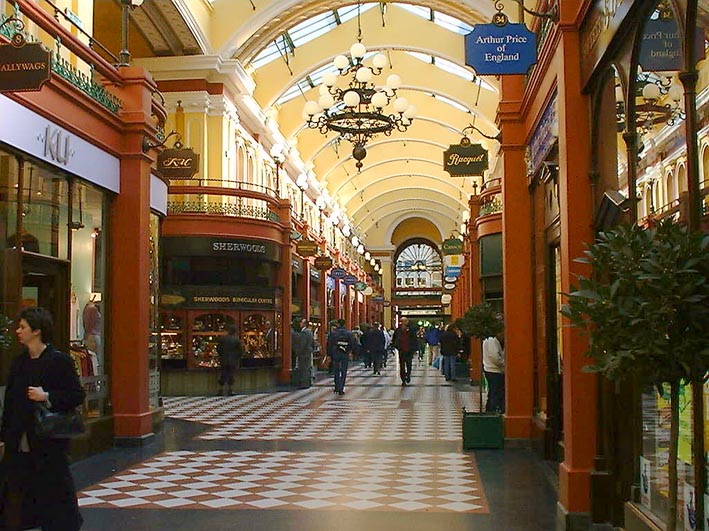
Increasing traffic demands brought problems at Snow Hill and the GWR built a terminus station at Moor Street in 1909 to deal with suburban traffic from Leamington Spa and the new North Warwickshire line from Stratford-upon-Avon. Although a tunnel now connects it with Moor Street, this was originally a deep cutting that was subsequently built over. The result was one of Birmingham�s grand shopping malls, known as the Great Western arcade.
|
| Had common sense prevailed over politics, the GWR would have shared New Street, with countless users of easy interchange. The combined resources of three companies would have produced a far bigger station capable of handling all traffic, having provided additional approach lines, track and platform capability. | |
Curzon Street Goods Station
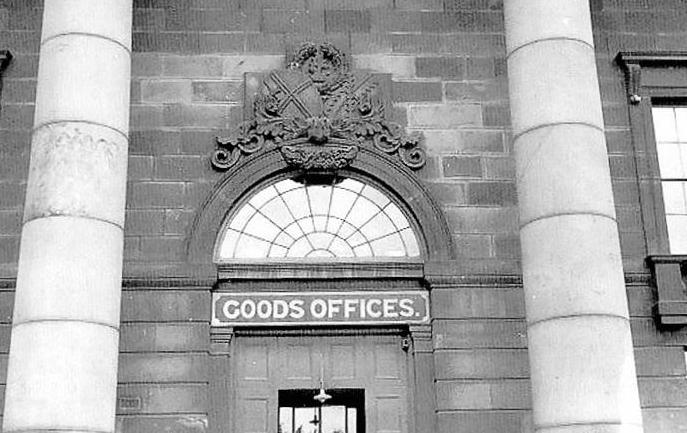
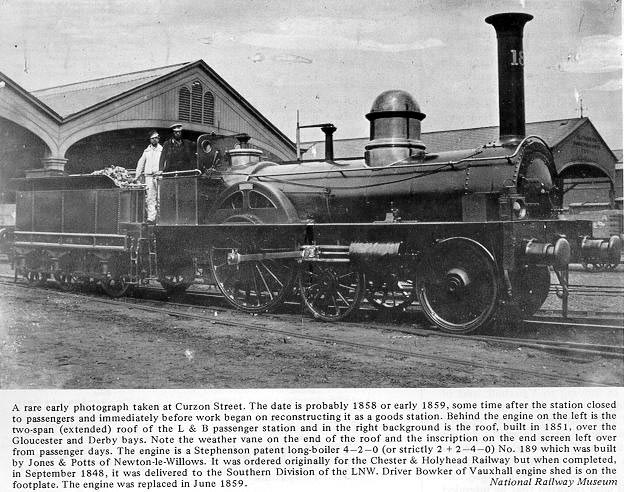
| After New Street Station opened in 1854, Curzon Street ceased to carry passengers, apart from local bank holiday and summer excursions, and never handled any regular passenger traffic. But goods traffic continued to be dealt with. The Hotel was closed and converted to office accommodation for the Curzon Street goods agent and his staff. From the mid 1850�s, railway goods traffic began to expand rapidly. Trade and Industry had adapted to the transport opportunities offered by the railway, and were now beginning to exploit them on an ever-increasing scale. |
|
|
Something of the scale of work undertaken can be judged from the fact that, in 1914, nearly 2,000 men worked at Curzon Street, and the stables were host to some 600 of the LNWR�s 3,800 horses. But after 1914, things would never be the same again. The Great War (1914-18) and WW2 (1939-45) brought about many changes to life, trade and industry in Britain. The damage to the British economy by the wars was considerable, and its effects were to last a long time. |
| In the years after 1950, road competition really began to bite. This, coupled with an accelerating rate of change in the nature of industry and industrial practices, resulted in a loss of much traffic. The majority of the traffic, which places like Curzon Street, had been built to handle practically vanished, and the process culminated in the closure of the depot. In the early 1960s,British Rail made an application to demolish the old Curzon Street Terminus, but Birmingham City Council and others stepped in to prevent this, thus preserving this important reminder of those pioneering days. | |
Demolished
However, British Rail was more successful in it�s application to demolish the Grand Entrance to Euston Station, London, and, in 1962, despite strong objections, this imposing Portico was demolished.
|
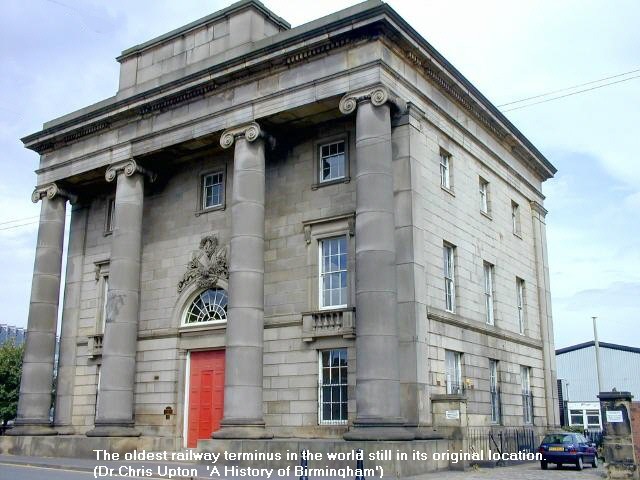
The Curzon Street Portico, designed by Philip Hardwick � �the oldest Railway terminus in the world still in its original location� � was restored for office use and is now used as office accommodation for Millennium Point. |
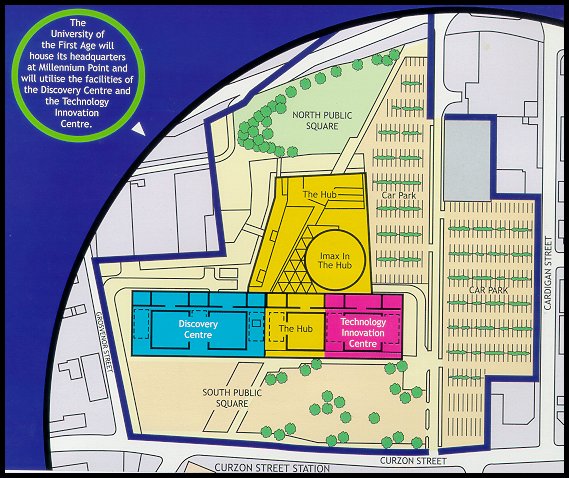
| Ironically, Parcelforce - one of railways biggest competitors for parcel traffic - now occupies most of the former Curzon Street goods yard, and another part of the site �the �Top yard� � is the home to Birmingham�s new Millennium Point Discovery Centre. |
|

