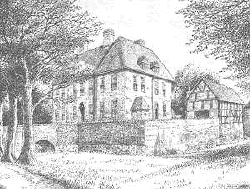
Kingshurst Hall
The earliest record of Kingshurst is in documents from
the late 13th/earth 14th centuries, when it is referred
to as part of the Manor of
Coleshill. there was a Kingshurst
Hall from about this time. The Hall had its own park and
farmlands and tenant farming was administered from
here.
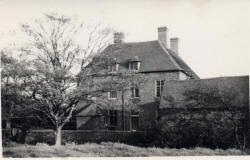 Walter Townsend's failing health led to the Hall
falling into a state of disrepair. All plans to salvage
it came to nothing due to a lack of funds. In 1960,
Walter was moved to a house in Castle Bromwich and in
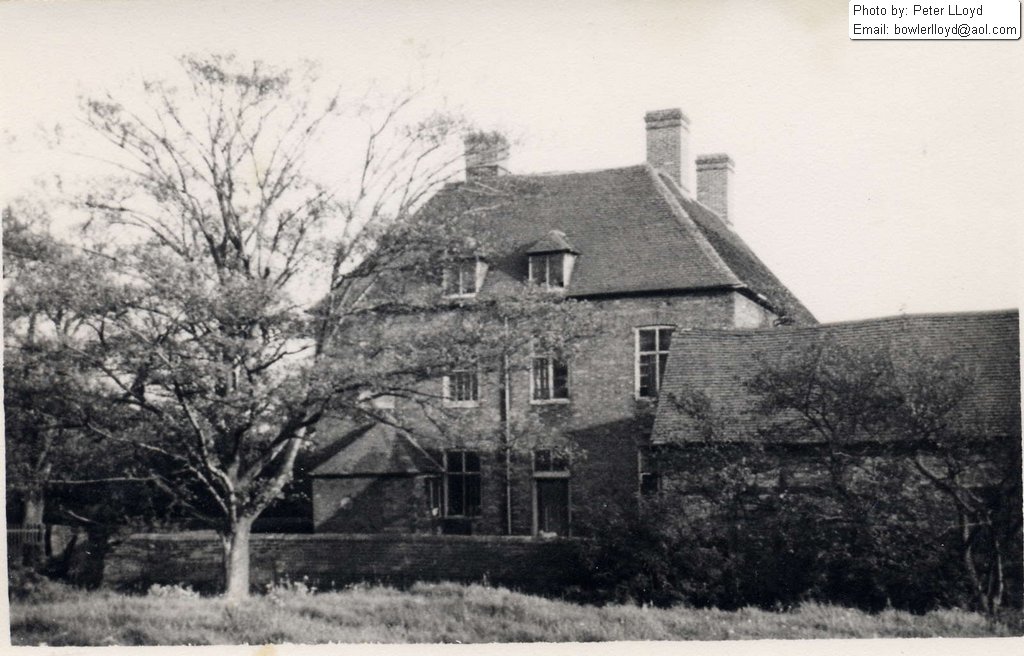
1962 the Hall was demolished. The photo on the right was
taken by Peter Lloyd in 1956 Walter Townsend's failing health led to the Hall
falling into a state of disrepair. All plans to salvage
it came to nothing due to a lack of funds. In 1960,
Walter was moved to a house in Castle Bromwich and in
1962 the Hall was demolished. The photo on the right was
taken by Peter Lloyd in 1956
Sheldon Hall and The Moated Mound
 When the Digby family were Lords of the Manor of
Coleshill, they managed it from afar, and the Hall
itself was tenanted. Records show that in 1610 the
tenant of Sheldon Hall, one William Bull, moved across
the river Cole to tenancy of Kingshurst Hall in 1610.
Sheldon Hall still stands, just across the
Solihull/Birmingham border in Tile Cross and is now a
Pub/Restaurant. When the Digby family were Lords of the Manor of
Coleshill, they managed it from afar, and the Hall
itself was tenanted. Records show that in 1610 the
tenant of Sheldon Hall, one William Bull, moved across
the river Cole to tenancy of Kingshurst Hall in 1610.
Sheldon Hall still stands, just across the
Solihull/Birmingham border in Tile Cross and is now a
Pub/Restaurant.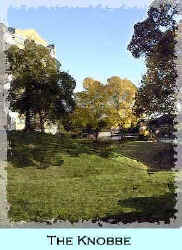
By marriage the tenancy later moved to the York family,
who gave there name to the small area of the original
Kingshurst Hall Park which remains today,
Yorkswood.
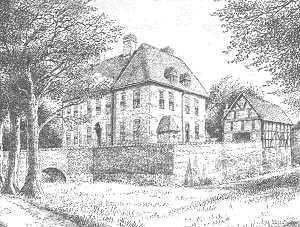
Between 1700 and 1720 Kingshurst Hall was rebuilt. The
new Hall was a large red brick building with a tiled
roof, reached by a brick bridge over its moat. By 1885
the tenancy had moved on to the Townsend family and
passed eventually to two brothers, George and Walter
Townsend. They ran the Farm, but George died in 1950, by
which time Birmingham City Council had taken ownership
and were then planning the development of Kingshurst for
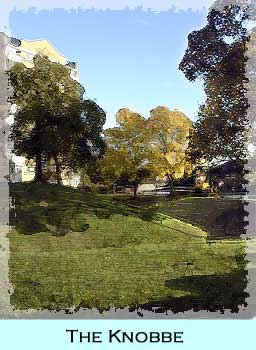
housing. In 1480, Simon Mountford had declared that
trees planted on 'The Knobbe' at Kingshurst Hall should
never be touched. This is the mound that stands
beside Stonebridge Crescent today, And the trees are
still there now.
Babb's Mill
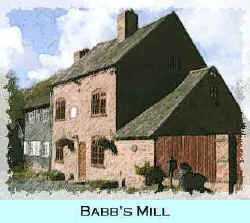
Although now marginally across the Solihull/Birmingham
border, Babb's Mill was part of the Kingshurst Hall
estate and was also tenanted in the last century by
members of the Townsend family.
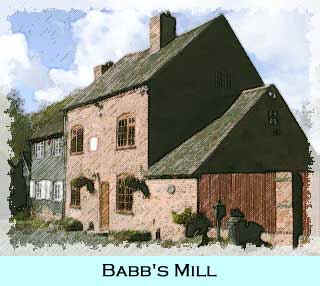
The current building is of uncertain age, but is
probably the second mill on the site, there having been
a mill on the site from the 13th century. Its name comes
from John Babb, miller there in the 16th century.
Originally an additional course was built to feed the
Mill Pool and the river itself ran parallel, but now the
river Icel. follows the 'new' course beside the
mill.
The milling of corn from the estate continued there
until the early 20th century. In the 1920s it was
converted to cottages. The Mill Pool was drained in the
Second World War. Today an old millstone is used as a
doorstep.
|