
Birmingham's Heritage and Attractions
Cadburys Bournville and Selly Oak
|
Cadburys Bournville.
In 1879 George and Richard Cadbury moved their chocolate factory from Bridge street in the city to Bournbrook, renaming it Bournville. They developed a factory complex that became renowned for its excellent working conditions. The establishment of Bournville Trust by George Cadbury in 1900 ensured the controlled development of the area. The factory is still working today and Cadbury World has become a major tourist attraction visited by many hungry school children every day. |

|
|
|
|
|
Bournville Carillon and The Rest House
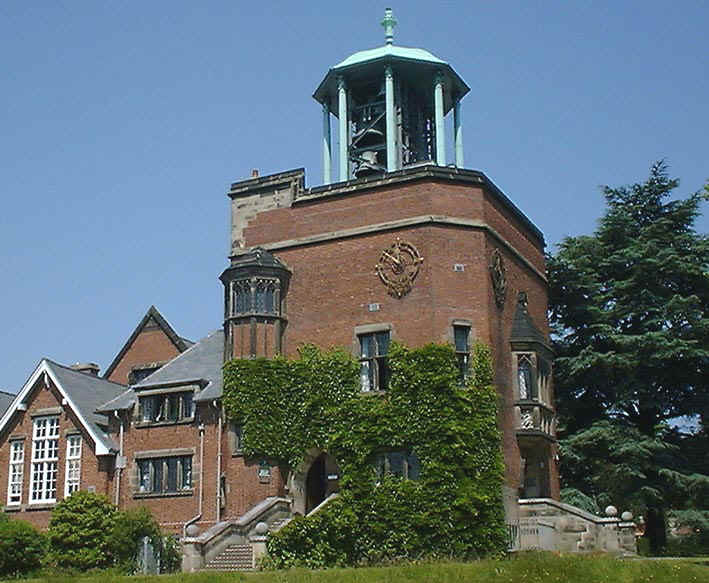
Bournville is home to one of the finest musical instruments of it kind in the world. The 48 bell Bournville Carillon was installed by George Cadbury in 1906 as is seen as a landmark surmounting the buildings of Bournville Junior School adjacent to Linden Road. The sound of the Carillon is magical in the open air as music of a variety of styles and composers is played by the skilful Carillonneur. Recitals are played Friday 5:00pm and Saturday 12 noon and 3:00pm Admission is free. |
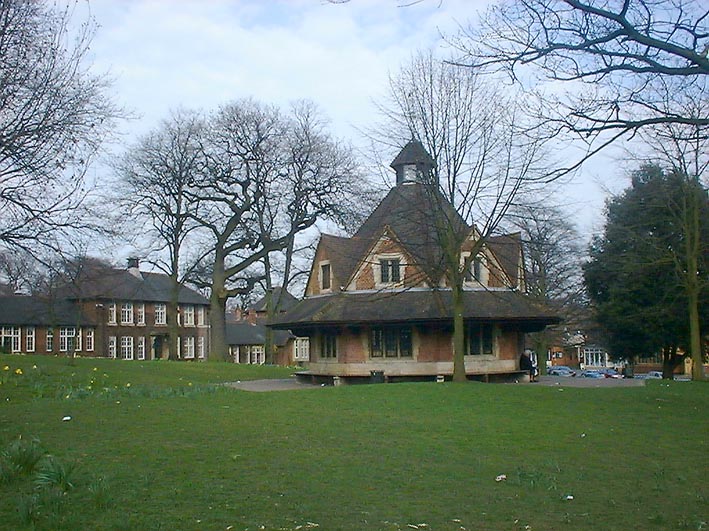
| Information about the Carillon and is available at the nearby visitor centre in the historic building known as the Rest House which is on the Village Green opposite. The Rest House also has associations with George Cadbury having been given to him and his wife on the occasion of their Silver Wedding Anniversary in 1914, by the employees of Cadbury Bros. Ltd. as a token of their esteem and gratitude to a man of outstanding benevolence and kindness. The visitor centre is open Wednesday to Saturday inclusive from February to December |
|
|
|
|
|
SELLY MANOR MUSEUM
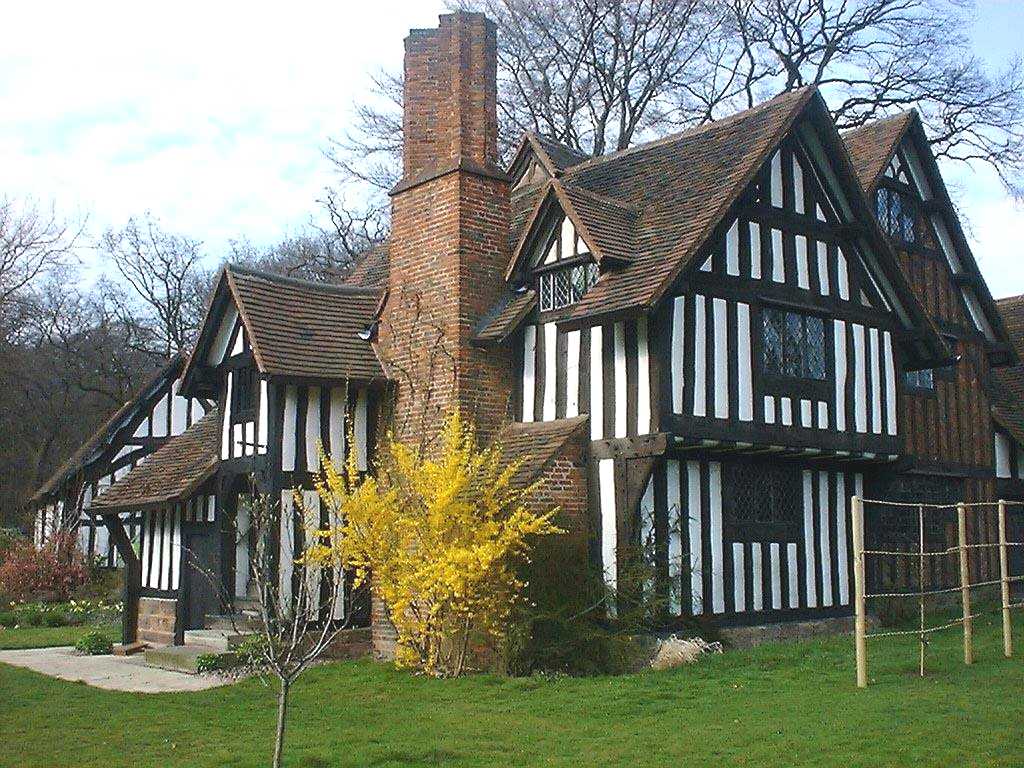
Also In the picturesque Cadbury village of Bournville is Selly Manor a
Tudor manor house, and Minworth Greaves, a medieval hall are two
half-timbered buildings that moved to the village green in the early
1900's by George Cadbury. Collection of Laurence Cadbury furniture.
The garden has Tudor features, including a turf seat and raised
vegetable beds, Open all year.
|
|
|
|
|
The Selly Oak Tree
In May 1909, fears about the safety the Oak tree with its lopped branches and the demands of road traffic and pedestrians led to its removal around the 21st of May. The stump was then saved and removed to Selly Oak Park. A brass plaque recorded that it had been put there by Kings Norton and Northfield Urban District Council. |

|

|
The plaque read 'Butt of Old Oak Tree from which the name of Selly
Oak was derived. Removed from Oak Tree Lane, Selly Oak 1909'. By 1976
it was reported that the stump was mostly rotten, but in 2002 the
remains of stump and plaque can still be found, covered in ivy. These photographs have now led to the dendrochronology (tree ring dating) of the old stump. |
|
|
|

