Churches and Cathedrals Heritage and Attractions
Birmingham's Heritage and Attractions
|
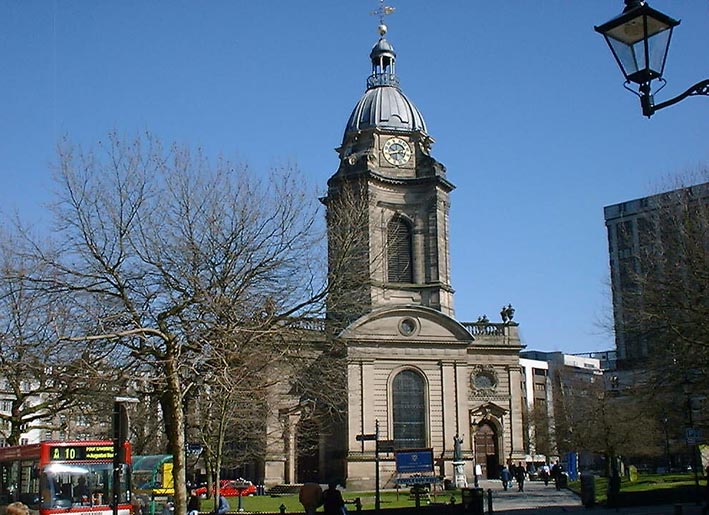
Birmingham Cathedral (St Philip's) St. Philip's Church in Colmore Row was consecrated in 1715, having been designed by Thomas Archer in the baroque style. When Birmingham became a bishopric in 1905, St Philip's, despite rival claims from St Martin's, became its cathedral. Inside there are fine windows by Burne-Jones, for which the artist waived his fee, being himself a Birmingham man. Guided tours are available. The graveyard has been a popular place for workers to take a lunch break in the summer. During 2002 the area is near completion of major restoration and the grounds are partially closed to the public
|
|
|
|
|
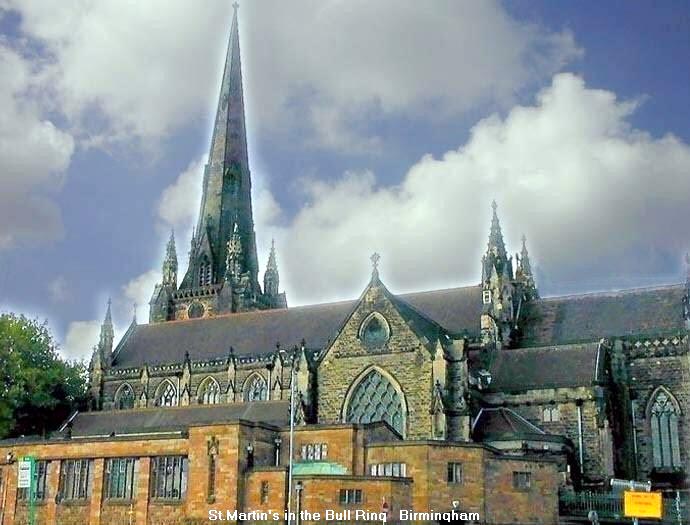
St Martin's in the Bull Ring
The parish church of Birmingham, or "The Cathedral of the Bull
Ring", as some would say. The first church was probably Norman,
but was rebuilt in the 13th century.
|
|
|
|
|
|
|
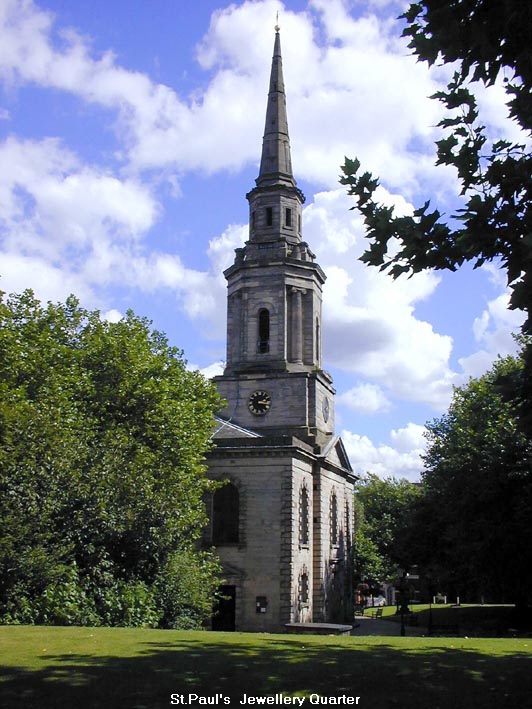
Grade I listed church in Birmingham's last remaining 18th century square, built in 1776, with associations with Matthew Boulton and James Watt. The East Window is a painted account of the conversion of St. Paul copied by Francis Egginton from Benjamin West's original. Also new (2000 AD) a stained glass window with design based on the local Jewellery trade.
|
|
|
|
|
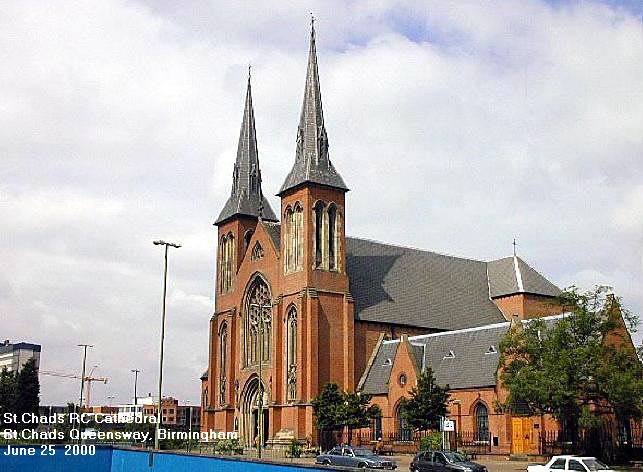
One of the finest neo-gothic church buildings in England, built to the design of Augustus Welby Pugin and opened in 1841. Much of the work is by Hardman & Co. The mother church of the Roman Catholic Arch Diocese of Birmingham, it contains some splendid 19th century stained glass, a 16th century Flemish pulpit, and a late medieval statue of the Virgin Mary, as well as the largest new manual organ in the UK, built by Walkers & Co in 1993.
|
|
|
|
|
|
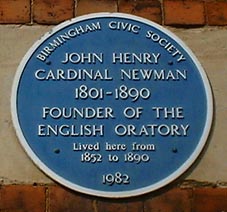
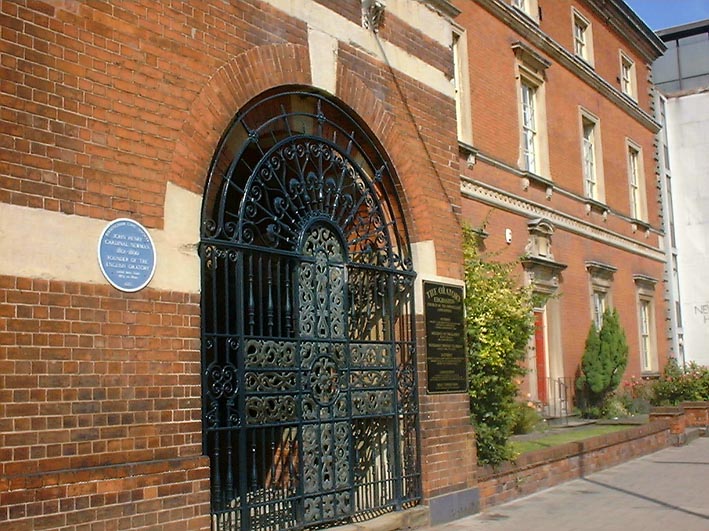
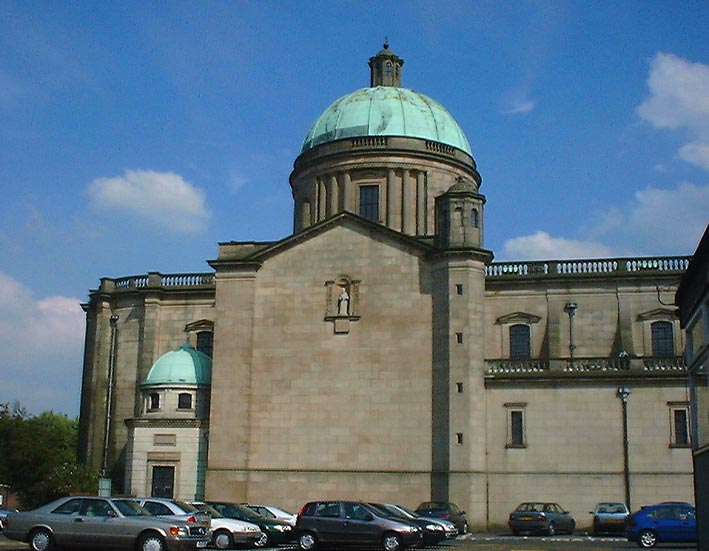
Oratory of St Philip Neri Hagley Road Edgbaston 'Little Rome in Birmingham', the Oratory Church was built between 1907-1910 in the Baroque style of the Church of San Martino at Rome, as a memorial to Cardinal Newman, founder of the English Oratory.
|
|
The plan comprises of a sanctuary, nave, transepts, and several chapels, including a fine one to St. Philip Neri A barrel dome roof is a notable feature of the interior. The solemn opening by Bishop Ilsley took place October 9, 1906. This view of the Oratory is from the car park. |
|
|
|
|
|
|
St Agatha's Church Stratford Road, Sparkbrook Designed by Bidlake and completed in 1901, this neo-gothic church is a Grade 1 listed building,. The spectacular tower is complimented by a beautiful interior where the artifacts include an 18th centaury font, paneling from the former Christ Church in Victoria Square and a window by Evetts (1962) |
|
|
|
|
Synagogue Blucher Street, Singer's Hill. Architect Yeoville Thomason (1856) There was a synagogue in the Froggery (don't ask!) at the start of the 18th century. Moved to Severn Street 1807, synagogue there rebuilt 1827. Lord George Gordon (leader of the 1780 anti-Catholic riots) received his circumcision here after converting to Judaism. A separate congregation erected another synagogue in Wrottesley Street, consecrated 28/9/1853. The congregations reunited and the Blucher Street synagogue was consecrated 24/9/1856. |

|
|
|
|

|
Central Mosque Belgrave Road The mosque follows traditional design, was opened in 1980 and has a capacity of of 200, Prominent features include a large central dome and a minaret from which, conventionally, the Mozin would the call for prayer.
|
|
|
|