
Birmingham's Heritage and Attractions
|
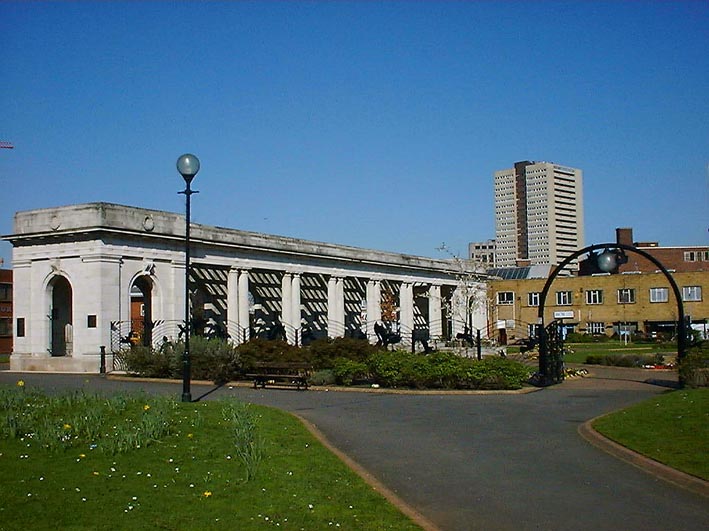
The peace garden of remembrance on Bath Row is a beautiful and serene place of remembrance. The Colonnade originally stood where Centenary Square is now.
|
|
|
|
|
The Queen's Hospital
Founded 1847 in Bath Row, it became Birmingham Accident Hospital in 1941 and closed in 1993. The building frontage was listed and incorporated into new accommodation for University Students. The building is marked with a blue plaque by Birmingham Civic Society.
|

|
|
|
|

|
The Former General Hospital now The Children�s Hospital.
1892-7,
The building, in dark red terracotta, has features such as elliptical and round arches reminiscent of the Law Courts, polygonal towers with high pitched roofs and terracotta decoration, Its entrances were originally decorated with figures representing Medicine, Surgery and Philanthropy, and Air, Purity and Light by J.W.Rollins many of which seem to have disappeared. with the re-use of the building as the Children�s Hospital. |
|
|
|
|
The Methodist Central Hall and Citadel. Grade II, 1899/03, by Ewan & James A. Harper. This is a large red brick and terracotta building situated opposite the the Law Courts and its slender tower provides a terminal feature to the northern end of Corporation St. There are two ground floor facades, both with shops and two floors of offices above. |

|
|
|
|

|
Victoria Law Courts. Grade II, 1887/91. This masterpiece was won in a competition from 134 designs received by the judge, "the father of terracotta", Alfred Waterhouse, by Sir Aston Webb and Ingress Bell. This was the first major public building in Britain to have a frontage faced entirely with red terracotta. Queen Victoria herself laid the foundation stone in 1887 for this magnificent building that is lavishly decorated with sculptures and other architectural details. |
|
|
|

|
Queen Elizabeth II Law Courts |
|
|
|
|
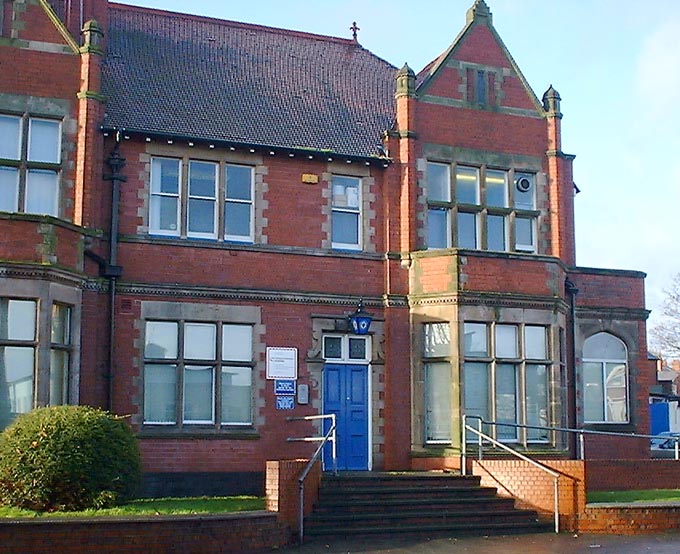
West Midlands Police Museum The West Midlands Police Museum at Sparkhill Police Station, houses a wide range of pictures, information and items to show the development of policing in and around Birmingham. From an early watchman's lamp and staff to modern drug testing equipment, there is a complete record of the work of the police. The museum is available for school groups and has a small classroom complete with old wooden desks. Please contact the Museum to arrange appointments for teacher and class visits.>Museum Website |
|
|
|
|
| Back to Heritage index | |
