|
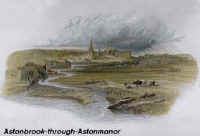
Aston.
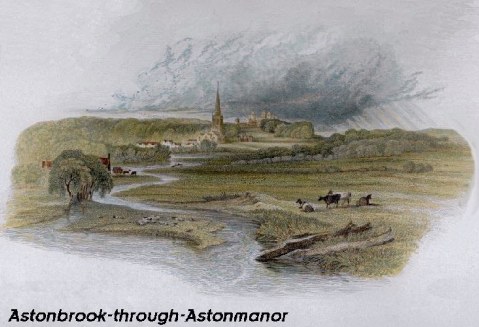
During the Old English period, as the population in a village grew
then some folk left to make clearings in forests, woods and
heathland and start new settlements. Aston was one such place. In
the Domesday Book of 1086 it was recorded as Estone, meaning the
east farmstead, village, manor or estate.
In 1066, Aston was one of the many manors held by Earl
Edwin.
The Domesday Book indicated that Aston had a church, a mill, a wood
which was three miles long and half a mile broad, and eight hides.
The population was made up of 30 villeins, twelve bordars and one
serf - and their families.
Over the years its name changed Estone, Aston, Aston Manor and
finally became part of Birmingham in 1911.
|
|
|
|
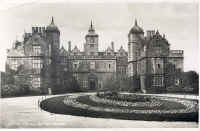 Aston Hall Aston Hall
The building of Aston Hall began in 1618 by Sir Thomas Holte
(1571-1645 and completed about 1635.
The magnificent Aston Hall sited on a hilI; the great house
allowed Sir Thomas Holte to look down and over his wide lands. The
Holtes were to live in Aston Hall for over two hundred years also
to be rented by James Watt, now owned by Birmingham City Council,
and now is run as a museum.
It is one of the finest Jacobean house's in Great Britain,
refurnished to the styles of it's day, one of the highlights of
the year a candle lit evening tour of this fine house bringing a
realistic feeling to the occasion. There are plans to refurbish
the old stables to the front and left of the building, was once a
caf� but now stands in disrepair.
The hall is situated in several acres of parkland, playing fields
and playground for young children, an oasis of green in the middle
of a built up area of industry and housing.
|
|
|
|
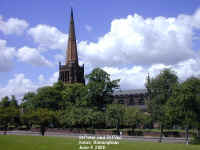 Aston Parish Church Aston Parish Church
St Peter and Paul church, Aston Juxta Birmingham standing in the
shadow of Aston Hall a church as stood on this site for many
hundreds of years serving the religious needs of the people of
Aston, and now a multi - cultural society.
The church as seen many changes over the years to its structure
now looks over the Aston Expressway and Spaghetti
Junction.
|
|
|
|
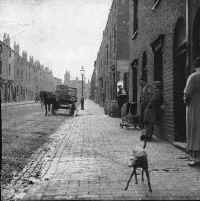 Houses Houses
There are many types of houses in the Aston area high rise flats,
terrace housed, new modern houses standing on the ground were once
stood the infamous back to back houses crowded in to numerous
courts. There where two different back to backs, two storey and
three storey, with no running water no electric or gas. The first
power was gas lamps, the three storeys consisted of a very small
kitchen, living road, bedroom and an attic, and a cellar was
underneath the kitchen. The court supported several families with
communal brewhouse two shared toilets and a lean to with the
miskin bins. The new modern houses have gardens and all mod cons
with plenty of space not like the old overcrowded days.
|
|
|
|
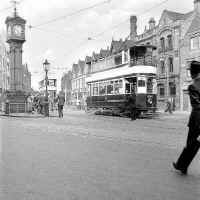 Roads Roads
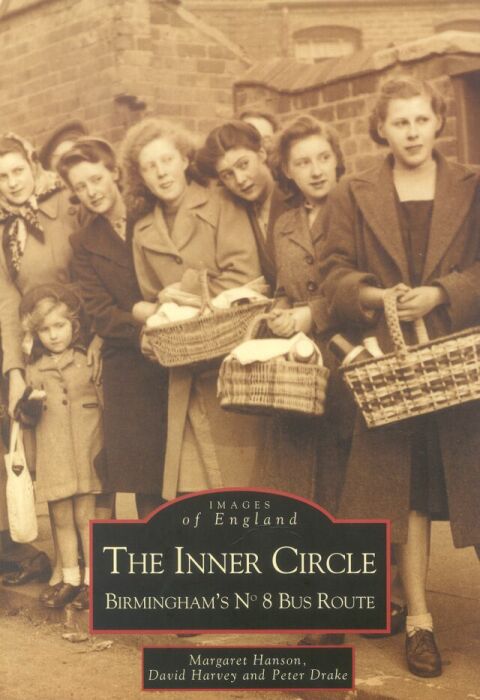
Aston triangle, up Lichfield Road Aston Cross turn off Aston
Street into Newton Row, along High Street at six ways turn into
Victoria road completing the triangle at the A38 Lichfield Road.
The two main shopping areas being Newtown Row and Aston Cross.
Other well-known roads Summer Lane were the song of See the Palm
trees Sway down Summer Lane is attributed to. Rocky Lane which
took you to Nechells, Lichfield Road into Erdington Six ways
junction where Lozells Road, Birchfield Road, Alma Street, Witton
Road, Victoria Road and High Street. Out lets to Handsworth, Perry
Barr, Witton, Erdington, Birmingham City centre and Snow
Hill.
|
|
|
|
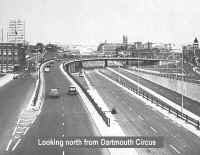 In 1969 construction began on the A38(M) Aston Expressway to take
traffic from the City Centre to the M6 at Gravelly Hill or as it
is better known "Spaghetti Junction" and continuing as
the A38 to Lichfield. The Aston Expressway and the M6 were
formally opened to traffic on 24th May 1972. The main carriageway
was designed as a single seven-lane highway to be used on a tidal
flow basis. The original intention was to operate the tidal flow
with four lanes and three lanes morning and evening depending on
the direction of the rush hour traffic. This was never tried out
since it was thought too dangerous to have traffic traveling in
opposite directions on adjacent lanes. For many years it was used
as dual three lanes with a buffer lane but in recent years tidal
flow has operated during the commuter periods on a four and two
basis whilst always maintaining the clear buffer lane. In 1969 construction began on the A38(M) Aston Expressway to take
traffic from the City Centre to the M6 at Gravelly Hill or as it
is better known "Spaghetti Junction" and continuing as
the A38 to Lichfield. The Aston Expressway and the M6 were
formally opened to traffic on 24th May 1972. The main carriageway
was designed as a single seven-lane highway to be used on a tidal
flow basis. The original intention was to operate the tidal flow
with four lanes and three lanes morning and evening depending on
the direction of the rush hour traffic. This was never tried out
since it was thought too dangerous to have traffic traveling in
opposite directions on adjacent lanes. For many years it was used
as dual three lanes with a buffer lane but in recent years tidal
flow has operated during the commuter periods on a four and two
basis whilst always maintaining the clear buffer lane.
|
|
|
|
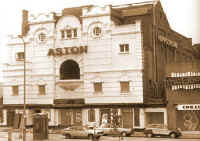 Cinemas Cinemas
The jewel in the crown was the Aston Hippodrome. Grand opening
performance was on Monday December 7th 1908, It cost �10000 to
build Architects James Lister and Company. Tommy Fitzgibbon took
over the management 12 February 1938 The same year the Hippodrome
was burnt down it took six months to refurbish at the cost of
�38000. It closed as a theatre 4th June 1960. The last
performance a revue, A to Z of Striptease. It later became a bingo
hall and was demolished September 1980
The Aston Cross Picture House The Astoria once a theatre. Victoria
Playhouse on Victoria Road. The Newtown Palace Newtown Row, the
Globe, and the Orient Picture House High Street these where
demolished in the sixties to make way for the new dual carriage
way.
|
|
|
|
 Alpha Television Studios Alpha Television Studios
Alpha Television Studios, opened on 17 February 1956. Lunchbox a
light-hearted sing-along show presented by Noele Gordon with Jerry
Allen and his Trio providing the music. Jean Morton, was a
continuity announcer on ATV. She was sent the two Koala Bears in
1962. and took them on screen. They were a resounding success and
puppets were introduced which replaced the original toys. The
Tingha and Tucker Club was formed, which attracted some 750,000
members !
1963--The Beatles traveled to Alpha Television Studios, to appear
on the ABC "Thank Your Lucky Stars."
|
|
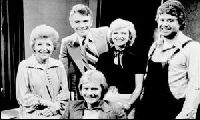 Crossroads was a
ground-breaking British soap set in a Birmingham motel, starring
Noele Gordon, Ronald Allen, Jane Rossington and Tony Adams which
ran from 1964 to 1988. In its heyday the series attracted 18
million viewers and often topped the television charts. After the
closure of the Alpha Television Studios in 1981 recordings were
made at Central Studios in Birmingham Crossroads was a
ground-breaking British soap set in a Birmingham motel, starring
Noele Gordon, Ronald Allen, Jane Rossington and Tony Adams which
ran from 1964 to 1988. In its heyday the series attracted 18
million viewers and often topped the television charts. After the
closure of the Alpha Television Studios in 1981 recordings were
made at Central Studios in Birmingham
The series did return 18 years later on March 4th 2001, but this
time no longer a motel, but a four star hotel.
|
|
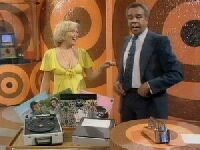 Other popular shows recorded at the studios included The Golden
Shot, first presented by Bob Monkhouse was recorded and broadcast
in 1967-72 and 1974-75. The contestants would mostly be telephone callers on the show,
and they would play the game by instructing a blindfolded
cameraman to adjust their aim in order to fire a 'telebow' (a
crossbow tied to the camera) at targets.
The bow was loaded by the show's feature character, Bernie the
Bolt with Hostess Anne Aston (famous as she was
supposedly unable to count without using her fingers).
Charlie Williams was host of the 1970's version of the show.
Other popular shows recorded at the studios included The Golden
Shot, first presented by Bob Monkhouse was recorded and broadcast
in 1967-72 and 1974-75. The contestants would mostly be telephone callers on the show,
and they would play the game by instructing a blindfolded
cameraman to adjust their aim in order to fire a 'telebow' (a
crossbow tied to the camera) at targets.
The bow was loaded by the show's feature character, Bernie the
Bolt with Hostess Anne Aston (famous as she was
supposedly unable to count without using her fingers).
Charlie Williams was host of the 1970's version of the show.
After ATV left the building it became the studio for Birmingham's
first independent local radio station
BRMB
|
|
|
|
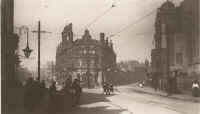
The Bartons Arms
click here for photos of the Barton's Arms today
|
Pubs
There was a pub on nearly every corner on the streets of Aston, just
to mention a few. The Royal Albert, The Golden Eagle, The Royal Oak
(Bosted Boot) the Black Horse, The Shareholders all in Park Lane.
A few well known ones The Scotch House, The Clements, The Waggon and
Horses, The Vine (The Clock) but the most famous being The Barton
Arms built in 1901 for M & B Breweries a grand Victorian
building is going through the process of a major refurbishment the
new owners Oakham Ales of Peterborough it as seen many famous stars
from the entertainment world and visitors from all over the world to
view it's magnificent interior
|
|
|
|
 Industrial past Industrial past
The Gun factory bought by Kynocks, Dunlop Tyres, Hercules Cycles
and Tubes industries Rocky Lane. Norton Motor cycles, Sun
Bicycles, Coronet cameras, Ansells and Atkinsons breweries, The
Midland Vinegar Company the forerunner of
HP Sauce.
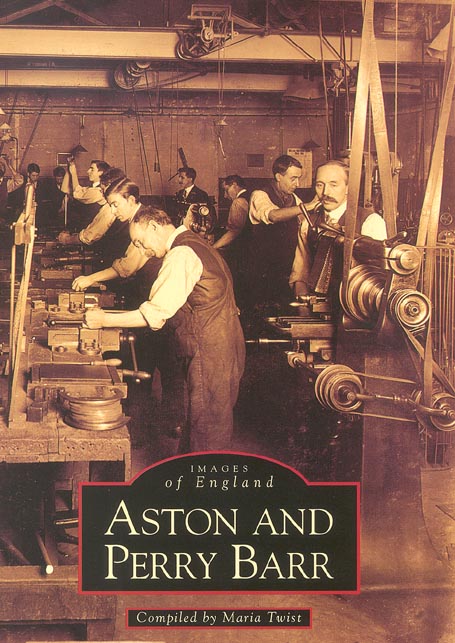
Then there was the cottage industries pearl button makers brass
bed and fender makers pin makers and nailers, the lifeblood of the
poor and needy families of Aston.
|
|
|
|
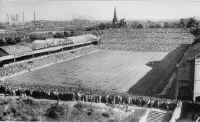 Sport Sport
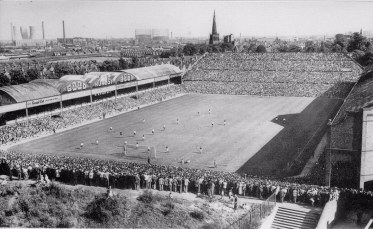
Founded in 1874 by cricketers from the Villa Cross Wesleyan
Chapel, Aston, Birmingham. They played on Aston Park, moving to a
field in Wellington Road, Perry Barr in 1876. Prominent
nationally, the club was a founder member of the Football League
in 1888. The landlord at Perry Barr made such demands that the
club sought its own ground and eventually moved back to Aston
occupying the Aston Lower Grounds, which had already been used for
some big games. Not known as Villa Park until some time later, the
ground first saw league football in 1897. The Trinity Road Stand
was redeveloped during the 2000/01 season, making Villa Park once
again one of the finest stadiums in Britain and indeed Europe.
|
|
|
|

|
Famous names
Sir Thomas Holte of Aston Hall. Sir Arthur Conan Dolye, Doctor and
writer was in residence at No 63 Aston Road North at the surgery of
Dr Reginald Ratcliffe Hoare a surgeon. He was at this address from
1878 to 1881 according to the Birmingham Civic Society.. Albert
William Ketelbey, musician. Sir Edward Downs, Johnny Prescott,
Heavy weight boxer lived in Burlington Street with his nan. Roy Holder, film and television star.
Born in a back to back house in Park Lane Aston, attended
Burlington Street and Upper Thomas Street schools, first acting
role was in the Train Set made in the ATV studio's on Aston Cross
in the early 1960s. Roy also appeared along side Hayley Mills in
"Whistle down the Wind"
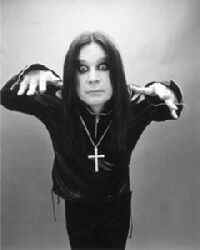
Ozzie Osbourne, lived at
14 Lodge Road, Trevor
Burton
One of the founder members of the Birmingham pop group The
Move, attended Upper Thomas Street School, born in Catherine
Street Aston. Tony Iommi, Bill ward,
Gezzer Butler, all of Black Sabbath
|
|
> More photographs of Aston
|
|
|
|